What's the Damage? Quoting Design Work on One Page
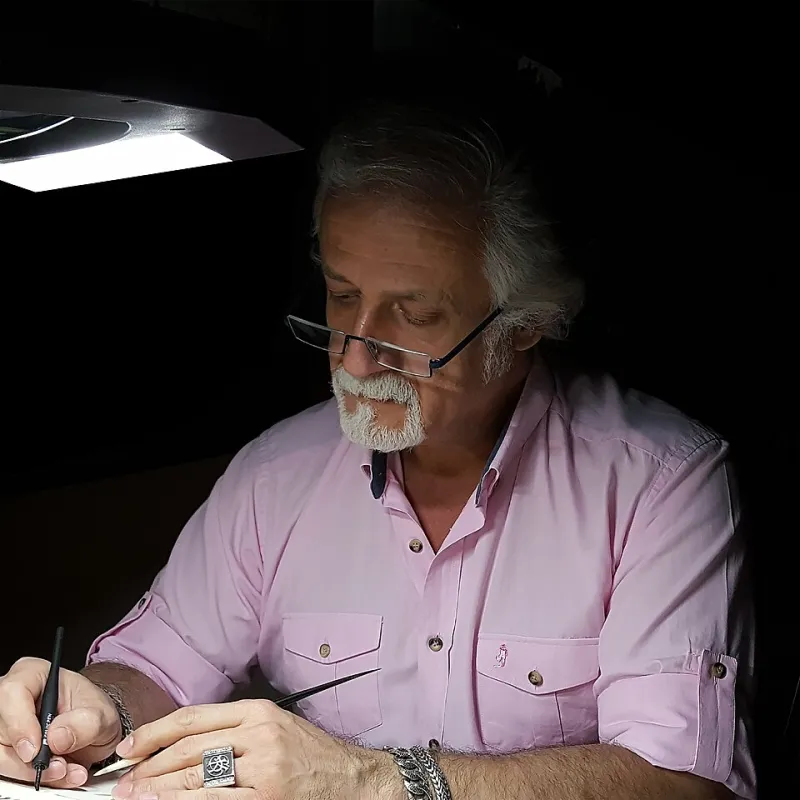
Photo: Serdar Kipdemir, CC BY-SA 4.0, via Wikimedia Commons
A client once sent over a fourteen-page proposal for a five-page website. Page nine explained the revision policy. Page eleven had a photograph of people pointing at a laptop. The price was on page thirteen, in a table, in nine-point type.
They had asked for a quote. What they got was a document.
The proposal nobody reads
Nobody reads page nine. Nobody has ever read page nine. Page nine exists because someone, somewhere, felt that a bigger document looks more professional, and because templates are easier to inherit than to question.
Meanwhile the client is doing what clients do: skimming for the number, failing to find it, and emailing to ask. Any document that generates the question it was written to answer has failed at its one job.
What a client is actually deciding
Strip it back and there are three questions in the room:
- What am I getting?
- What does it cost?
- What happens if it goes sideways?
Everything else — the mood board, the process diagram, the paragraph about your values — is either supporting evidence or decoration. Some of it is genuinely useful. Almost none of it needs to arrive before the number.
UK buyers, in particular, are a blunt bunch in a good way. They will ask what it costs within four minutes, and if you dodge, they will assume the worst and go and get three other quotes while they are at it.
The one-line formula
Here it is, unglamorous and effective:
Scope + Price + Assumptions = Decision.
One sentence for each. The scope says what exists at the end. The price says what it costs and how it is paid. The assumptions say what you are both taking for granted. If the client can nod at all three, you have a deal. If they push back, you have found the actual conversation, which is the entire point.
Scope: one sentence, no adjectives
Good scope lines read like instructions. Bad ones read like brochure copy.
- Yes: Six pages designed and built on your existing WordPress install, copy polished from your draft, live by 14 March.
- No: A bespoke, immersive digital experience that brings your brand story to life.
The second one costs you a week of emails and tells the client nothing. The first one tells them what they are buying and when they will have it. Adjectives are where scope creep goes to breed.
Price: the number, then the shape of the number
Lead with it. Then say how it lands.
£6,400 plus VAT. Half to start, half on launch.
That is a complete price. If there is a genuine fork in the road, add one line for it — '£1,200 more if you want the booking system' — and resist the urge to build a matrix. A matrix is how a one-page quote becomes a fourteen-page proposal again.
A note on the small stuff: VAT should be stated, not implied. Expenses, travel and third-party costs should be named and priced rather than lurking behind 'as incurred'. Nobody has ever felt more confident about a supplier after discovering an invoice they were not expecting.
Assumptions: at eye level, not page nine
An assumption is not a disclaimer. It is a shared starting point, and it belongs above the signature, not in a grey box at the back.
Write them as statements a client can either nod at or push back on:
- You will supply final copy and images by 7 February.
- One named person signs off at each stage.
- Two rounds of revisions are included; further rounds are billed at £95 an hour in 30-minute chunks.
- Fonts, stock imagery and plugins are licensed in your name, at cost plus nothing.
- The design is handed over on final payment.
Each of those is a decision the client can make in ten seconds. Each of them is also a fight you have now avoided in week six.
The awkward questions, dragged into daylight
Every one of these normally hides on page nine. Put them on page one instead, in the same size type as everything else.
How many revisions? A number, then a rate. Not 'reasonable amendments'. What if our content is late? The launch date moves; the price does not. Who owns the files? The client, on final payment. You keep the right to show the work. What if we want to stop? State the notice period and the kill fee now, calmly, while everyone is still friends. What is not included? Hosting, maintenance, photography, copywriting, that second language version you will definitely want in March.
None of this is hostile. It is just the boring half of a professional relationship, written down somewhere both parties can find it.
What you give up
The theatre. The sense of occasion. The satisfying thud of a PDF landing in an inbox.
Some clients genuinely do want a deck, particularly in larger organisations where a purchase decision travels through four people who were not on the call. Fine — send them the deck. But send the one-pager too, at the top, and let the deck be an appendix. The person with the budget will read one of those two things, and it will not be the appendix.
A page you can paste into an email
Website redesign — quote
Scope: Six pages, designed and built on your current WordPress site, with copy polished from your draft. Live by 14 March.
Price: £6,400 plus VAT. 50% to start, 50% on launch. Booking system extra at £1,200.
Assumptions: You supply final copy and images by 7 February. One named approver. Two rounds of revisions included, then £95/hr. Hosting paid directly by you. Full ownership on final payment. If we stop, 14 days' notice and work to date is billed.
Next step: Reply to confirm and we will send the deposit invoice and a kick-off date.
That is the whole thing. It fits on a phone screen, which is where it will be read.
Clarity is not the opposite of craft. It is the first thing craft looks like from the outside.